Acrylic roof coatings can protect sound concrete and cement-plaster surfaces from UV exposure, hairline cracking, and weathering, but they cannot compensate for blocked drains, wet insulation, moving structural cracks, or failed flashings. By the end, you will be able to diagnose the roof, prepare the substrate, specify the coating system, and question a supplier about the evidence needed before purchase.
Key takeaways
- Repair structural defects and ponding before specifying an acrylic coating.
- Clean, dry, sound concrete is essential for reliable coating adhesion.
- Reinforce cracks, joints, penetrations, and movement-prone details separately.
- Control wet-film thickness and protect the coating from rain and traffic.
Which Roof Defects Can an Acrylic Coating Actually Address?
An acrylic roof coating addresses surface-level water entry, not a defective roof structure. Specify it only after confirming that the substrate is sound, dry, adequately drained, and capable of accepting a bonded membrane.
Defects an acrylic system can address include hairline cracks in stable concrete, porous concrete, UV-degraded surfaces, and minor leakage around service penetrations when those details receive compatible sealant and embedded polyester reinforcement. Parapet joints and transitions, drains, curbs, and changes in plane need detail treatment; adding extra field-coat thickness does not replace reinforcement.
| Roof condition | What an acrylic coating can do | Decision before specification |
|---|---|---|
| Hairline cracks or porous concrete | Bridge or seal stable surface paths | Clean, repair, and confirm dryness |
| Parapet joints and transitions | Protect reinforced, sealed details | Repair open joints and failed flashings |
| Service penetrations | Seal prepared collars and interfaces | Correct plumbing leaks and movement first |
| Ponding water | Resist exposure only when tested and permitted | Fix drainage unless the product expressly allows recurring ponding |
| Wet insulation or retained moisture | Cannot remove trapped water | Replace or dry affected areas |
Do not coat active leaks, moving structural cracks, open construction joints, corroded flashings, loose membrane, or blocked outlets. ASTM D6083 identifies an acrylic roofing material specification, not proof of compatibility or roof-system performance; request substrate, adhesion, weathering, ponding, and detail data. ASTM D4263 is a concrete moisture screening method, not a universal acceptance limit.
An integral concrete waterproofing admixture reduces permeability within concrete but does not provide an exposed roof membrane, flashing, crack bridging, or drainage control.
How to Diagnose and Prepare the Roof Before Coating
Start with the leak, not the roller. Roof leak diagnosis should trace water to its entry point by inspecting the underside, parapet joints, outlets, service penetrations, construction joints, and areas of ponding after rain. Do not coat over defective plumbing, moving structural cracks, wet insulation, or open seams.
1. Remove loose membrane, blistered coating, deteriorated concrete, algae, grease, dust, and corrosion products. Replace saturated insulation and repair failed flashings before surface preparation.
2. Complete concrete roof preparation mechanically where required. Use grinding, shot-blasting, or suitable scarification for laitance removal; acid etching is not a universal substitute because salts, poor rinsing, or a weakened surface can cause debonding.
3. Clean sound cement plaster and masonry, then repair cracks and voids with compatible repair material. Form a durable fillet at wall-floor junctions and clear blocked outlets so water can drain.
4. Let repairs dry, then check the surface for retained moisture. ASTM D4263 plastic-sheet testing is a screening method; follow the project’s stated moisture limit when quantitative testing is specified.
5. Confirm that the surface is stable and free of bond-inhibiting residue. Record pull-off results under ASTM D7234 when specified, including test location, dolly size, failure mode, and substrate condition.
Proceed only when the roof is clean, dry, sound, and continuously sloped to functioning outlets. A coating applied sooner can trap moisture and turn a preparation defect into blistering or debonding.
How to Build the Coating System Around Details and Movement
Start with movement, not the open roof field. Select a roof coating primer for the actual substrate: concrete, cement plaster, metal flashing, or an existing compatible membrane. Confirm adhesion and compatibility before covering the roof; a primer that softens the old coating can create a larger failure.
Build the system in this order:
- Brush primer into clean, dry surfaces, then apply compatible sealant to cracks, joints, penetrations, and wall-floor transitions.
- Embed polyester reinforcement fabric into the wet detail coat, pressing out wrinkles and leaving no dry edges.
- Use a brush or small roller at details, then a roller, squeegee, or approved spray setup for the field. Keep a wet-film gauge available to check application, not just theoretical coverage.
- Apply the first field coat after the reinforced details have cured, then apply the finishing coat at the stated cross-direction or overlap pattern. Respect the product’s recoat and rain-dry times.
| Area | Detail treatment | Why it matters |
|---|---|---|
| Parapets and plane changes | Seal the junction, form a continuous reinforced cove, and overlap onto both faces | Prevents cracking at sharp geometry |
| Service penetrations and curbs | Seal around the upstand, reinforce the base, and turn the membrane up the vertical face | Stops movement from opening a thin field coat |
| Roof drains and outlets | Clear the throat, reinforce the bowl and surrounding falls, and keep the outlet unobstructed | Prevents trapped water and membrane splitting |
Increasing field-coat thickness cannot replace reinforcement at moving details. Keep laps bonded and terminate the membrane above areas that remain damp.
How to Control Thickness, Weather Exposure, and Roof Use
Control application by installed dry-film thickness and weather records, then allow roof use only after the coating has cured for its stated service condition. Do not convert coverage per litre directly into performance: absorption, surface profile, roller texture, and wastage change the film built on the roof.
1. Record the product’s specified wet-film thickness and spread rate before work starts. Check each coat with a wet-film thickness gauge while it is still workable, and mark areas below target for correction.
2. Confirm dry-film thickness after curing with periodic checks at field areas and repaired details. Compare the readings with the product data sheet, not with the number of litres consumed.
3. Record substrate and air temperature, humidity, rain, and dew risk. Apply only within the manufacturer’s stated temperature limits, and protect each coat through its required rain-free and curing period; unexpected rain can wash out an uncured water-based film.
4. Confirm drainage before handover. Persistent ponding requires documented ponding water resistance for the actual coating system; do not rely on ASTM D6083 alone or on a nominal warranty period.
An exposed acrylic finish is not automatically a walking surface. Permit maintenance foot traffic only when the supplier identifies the cured system as suitable; otherwise install designated walk pads. Treat tiles, pavers, screeds, and other protective finishes as separate build-ups requiring verified adhesion, drainage, movement joints, and compatibility.
Never place them over uncured coating or use them to conceal retained moisture.
What to Request from an Acrylic Waterproofing Compound Supplier
Ask for documents that describe the installed roof system, not a promise of “long-lasting protection.” ASTM D6083 identifies requirements for a liquid-applied acrylic roofing coating; it does not prove suitability for every concrete slab, plaster surface, metal flashing, old membrane, or detail.
Request the following before comparing prices:
- A technical data sheet stating recommended substrates, primer, mixing, application temperature, wet-film coverage, target dry-film thickness, recoating interval, cure time, and limits on ponding water.
- Test evidence for adhesion, including ASTM D7234 results, plus compatibility data for the existing membrane, sealants, flashing, repair mortar, and reinforcement.
- Moisture instructions that explain whether ASTM D4263 plastic-sheet testing is only a screening check or whether the project requires quantitative moisture limits. Trapped moisture can blister or detach the coating.
- Written performance limits covering recurring ponding, crack movement, roof traffic, minimum and maximum application temperature, rain exposure during curing, and warranty exclusions.
- Solar reflectance and thermal emittance ratings, with initial and aged values from the Cool Roof Rating Council directory if cool-roof performance matters.
| Document or evidence | What to compare | Why it matters |
|---|---|---|
| ASTM D6083 data | Tested formulation and stated scope | A material specification is not a roof design |
| ASTM D7234 report | Adhesion on your substrate | Shows whether the film bonds, not merely dries |
| SDS | Hazards, handling, storage, and protective equipment | Prevents unsafe application and storage |
| Compatibility statement | Existing membrane and adjoining materials | Avoids softening, staining, or delamination |
Wizplast Chemicals Pvt. Ltd. is one supplier to ask for this project-specific information before selecting an acrylic product.
Related products
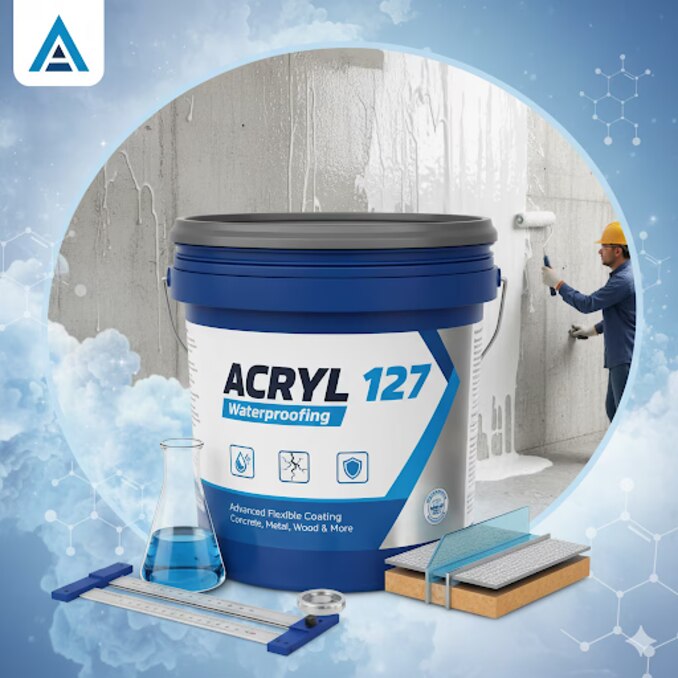
 | Waterproofing ACRYL 127 is a high-performance acrylic-based waterproofing compound developed by Wizplast Chemicals Pvt. Ltd. View product → |
 | Waterproofing by Wizplast Chemicals Pvt. Ltd. is an advanced acrylic-based waterproofing coating specially designed to protect surfaces from water seepage,... View product → |
Frequently asked questions
Which roof defects can an acrylic coating address?
An acrylic coating can address surface-level water entry through sound substrates, hairline cracks, and minor porous areas. It will not correct structural movement, major cracks, failed drainage, loose concrete, or active leaks from defective roof construction.
How should you prepare a roof before applying an acrylic coating?
Inspect the roof for cracks, hollow or loose areas, ponding water, contaminants, failed sealants, and drainage problems. Repair defects, remove unsound material, clean the substrate, and confirm that the surface is dry and able to accept a bonded membrane.
How should details and movement areas be treated?
Build the system around drains, parapets, penetrations, joints, cracks, and other movement-prone details. Reinforce these areas with compatible detailing materials before applying the field coating, rather than relying on a uniform coat alone.
What should you request from an acrylic waterproofing compound supplier?
Request the technical data sheet, application instructions, coverage and thickness requirements, substrate limits, drying and weather restrictions, compatibility guidance, batch details, shelf life, and documented quality information for the supplied product.