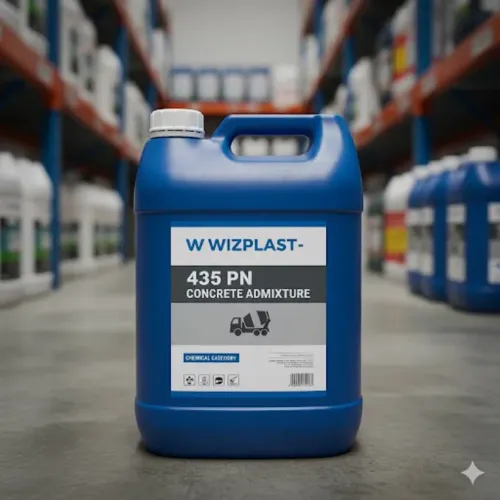

Large construction projects can consume substantial quantities of concrete, making admixture selection an important technical and commercial decision. The wrong Concrete admixture can create inconsistent workability, unexpected setting behaviour, higher consumption, pumping difficulties, and repeated mix adjustments.
Builders and procurement managers should therefore qualify both the product and the supplier before finalizing bulk purchases.
Define Performance Before Asking for Price
A quotation is meaningful only when the required concrete performance has already been established.
Provide suppliers with relevant project details such as concrete grade, cementitious materials, target slump, retention time, pumping requirements, expected temperature, and approximate monthly consumption.
This prevents procurement from becoming a simple price-per-kilogram comparison.
The objective is to identify the product that achieves the required performance efficiently and consistently.
Compare Effective Dosage
Suppose one admixture has a lower unit price but requires a substantially higher dosage. Another costs more per kilogram but achieves the same performance at a lower dosage.
The correct comparison is the admixture cost per cubic metre of accepted concrete.
Teams can calculate:
Admixture cost per cubic metre = dosage per cubic metre × purchase price per unit
This basic calculation provides a clearer commercial picture.
However, price should still be evaluated alongside concrete behaviour.
Conduct Controlled Trials
Never rely exclusively on a technical data sheet for a major procurement decision.
Test shortlisted admixtures using the cement, supplementary materials, aggregates, and water intended for the project. Keep trial conditions consistent so results can be compared fairly.
Useful parameters include:
- Initial slump
- Slump retention
- Water reduction
- Concrete cohesiveness
- Setting characteristics
- Pumping behaviour
- Early strength
- Later-age strength
- Dosage efficiency
Plant trials can then verify whether laboratory performance translates effectively into actual production.
Check Manufacturing and Supply Capability
Large projects need consistent material over extended periods.
Procurement teams should assess production capability, quality control, batch consistency, documentation, packaging, storage requirements, and delivery planning.
Supply continuity can become especially important during large raft pours, high-rise construction, and continuous RMC production.
For developments in Navi Mumbai and throughout Maharashtra, regional logistics should be considered alongside technical suitability.
Assess Technical Communication
Admixtures interact with cement and other concrete constituents, meaning mix behaviour can change during the project.
A supplier should be able to discuss dosage optimization, compatibility, trial observations, and changes in concrete performance.
Wizplast Chemicals Pvt. Ltd. manufactures construction chemical products for professional applications and can be evaluated against these technical, commercial, and supply criteria when project teams are sourcing admixtures.
Build a Procurement Checklist
Before issuing the final purchase approval, confirm that:
- Required performance has been clearly defined
- Product data has been reviewed
- Compatibility trials have been completed
- Dosage has been established
- Cost per cubic metre has been calculated
- Strength results meet project requirements
- Supply capacity matches consumption
- Quality documentation is available
- Storage conditions are understood
- Site teams know the correct dosing procedure
The best Concrete admixture is not necessarily the product with the highest water-reduction claim or lowest quoted price. It is the product that delivers the required concrete performance consistently under actual project conditions.
For builders, contractors, RMC manufacturers, and infrastructure companies, treating admixture procurement as a technical qualification process creates a stronger foundation for concrete quality, predictable production, and responsible project cost management.
Keywords